Economics organises Book release and Invited talk
A book release and invited talk focusing on “Artificial Intelligence and Structural Transformation of Indian Economy: A Way Forward to Viksit Bharat” was organised by the Post-Graduate Department of Economics, Mahatma Gandhi College, Thiruvananthapuram, on 19 February 2026 to contextualise the growing relevance of artificial intelligence (AI) for India’s economic development and to disseminate new scholarly work produced by the department. The objective was to integrate perspectives from academia, policy, and public service through a book release edited by Lt. Dr. Binukumar B.J. (Assistant Professor in Economics) with contributions from his research scholars, alongside an invited keynote that examined AI-enabled structural change and its implications for national development goals.
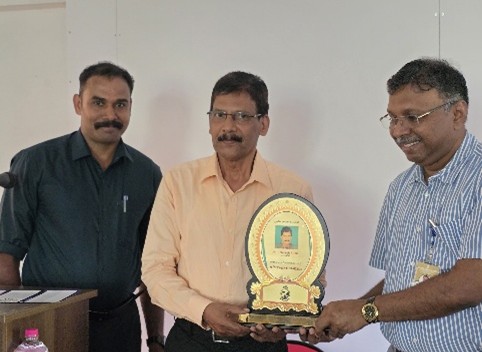
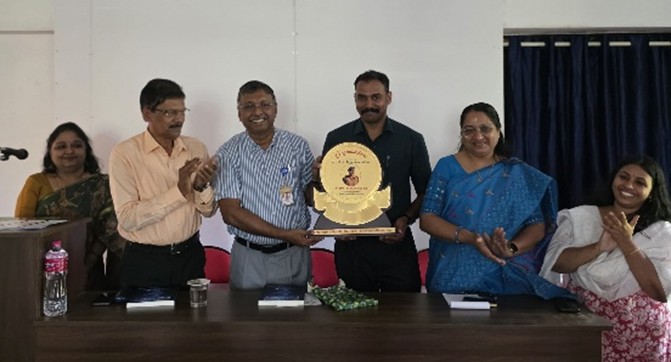
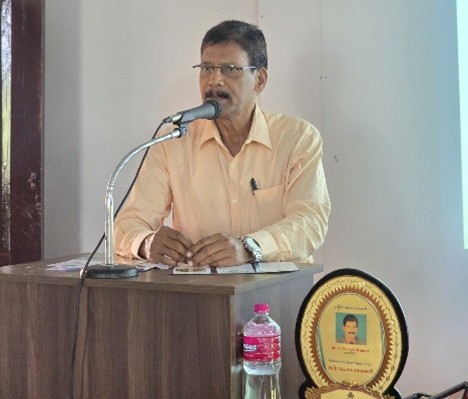
The programme included opening prayer and Acharyavandanam, welcome and presidential/inaugural addresses emphasising technology–policy integration, and a keynote by Dr. P. Suresh Kumar (Activist, Academic, Advocate, and former Member, Kerala Public Service Commission) drawing on public policy experience to articulate AI’s transformative potential for the Indian economy. The book was released by the Principal Dr. Anand Kumar VM and gifted it to the chief guest Dr. Suresh Kumar. Felicitations from practitioners and faculty highlighted the practical salience of AI, the need for interdisciplinary research, and the imperative for economic scholarship to keep pace with technological change. The event additionally recognised institutional and leadership achievements, including Lt. Dr. Binukumar B.J.’s selection to represent the NCC at RDC 2026 and his institution’s Best NCC Institution Award (Kerala and Lakshadweep), reinforcing a culture of excellence.
Overall, the programme functioned as a high-engagement intellectual forum that stimulated critical thinking, expanded student and researcher perspectives on AI and national development, and is expected to catalyse further research, collaboration, and policy engagement.